Connecticut families are currently grappling with a historic increase in their energy costs this winter. In January, the state’s two dominant investor-owned utility companies — Eversource Energy and United Illuminating Co. — more than doubled electricity supply rates. A typical two-resident home in Connecticut paid approximately $150 more for the same energy supply use in January than it did in December.
Fortunately, Connecticut customers have options and a choice when it comes to their energy supply. Residents can shop on the state-managed website, Energize Connecticut, for solutions that meet their specific energy use needs. Products that offer fixed rates and 6- to 36-month long-term contracts can help alleviate high bills and offer stability from volatile fuel prices. As of Feb. 22, Eversource and UI customers could save more than 50 percent on the supply portion of their electric bill this winter by choosing a competitive retail energy supplier, some of which offer 100 percent renewable energy products. (Utilities are only required to source 35 percent renewable energy for their supply offering.)
A recent survey conducted by Emerson College Polling found that 89 percent of Connecticut residents believe consumers should be able to choose their electric supplier, even if they don’t always shop for an electric supplier. In addition to price, survey results found that consumers may consider a competitive supplier for the stability offered by fixed-rate plans, 100 percent renewable products, and bundled options that offer additional value. Unfortunately, most Connecticut residents are unaware of their ability to shop.
In fall 2022, REAL developed a shopping guide for Connecticut customers and shared it with the media and regulators. Given the historic rate increases Connecticut customers on default service are facing, we wanted to equip them with tools specific to price shopping so they can make informed decisions and safeguard themselves against impending rate shock.
Connecticut’s leaders can — and must — do a much better job of informing households how to responsibly enroll in these options, especially when they can help consumers save up to half of what they would otherwise spend on the supply section of their energy bills.
The Connecticut Office of Education, Outreach, and Enforcement is a taxpayer-funded entity under the management of the Public Utilities Regulatory Agency (PURA), which regulates Connecticut’s energy and utilities sector. One of EOE’s tasks is to produce, distribute, and present educational materials through public forums to educate and better serve electric customers. EOE is in a position to take the lead in educating customers on their options and how to access and shop the state-managed website to find an energy supplier that meets their needs.
In other states with a competitive energy market, such as New Hampshire and Pennsylvania, regulators alert consumers to upcoming price increases, and communicate ways that customers can compare offerings, shop, and make an informed switch.
After approving the utility’s winter rate increase, PURA provided no information or resources to customers making them aware of their alternative options, and actually approved a proposal from utilities to expand the group of customers blocked from shopping. As a result, many utility customers who wanted to switch to cheaper suppliers were prevented from doing so. PURA’s actions are taking place despite data from Connecticut’s consumer watchdog, the Office of Consumer Counsel, showing retail suppliers saved consumers a total of $12,371,088 on their energy bills between January and December 2022. Given the recent utility rate increases, we expect this number to increase dramatically over the next six months.
It’s important to understand that energy choice doesn’t just provide a short-term solution to this season’s financial hardship. Competitive retail energy is a vital, long-term solution capable of transforming Connecticut’s energy market in a way that benefits consumers. The market needs regulatory partnership and support to achieve this.
Energy needs are changing. Consumers demand affordable, cleaner, and more efficient energy products that don’t conform to the one-size-fits-all approach of monopoly utilities.
We ask that state officials and media do everything they can to educate customers on their options and champion reforms that could reduce barriers to competition and choice in the energy market so Connecticut’s customers, environment and evolving energy landscape may continue to benefit from competition.
Written by Chris Ercoli
Chris Ercoli is President & CEO of the Retail Energy Advancement League
Energy choice is the option available to some customers in the United States to choose their energy provider.
Energy choice empowers consumers to choose their preferred electricity or natural gas supplier with a plan that aligns with their budget, priorities, and values. Suppliers, in turn, focus more on serving the customer and offer a broad variety of products and services. This competition drives innovation in the marketplace and better reflects changing consumer preferences.
For example, a supplier may offer plans with 100% renewable energy options, free electric vehicle (EV) charging on the weekends, or bundled smart home energy services like smart thermostats, smart meters, and backup power options that can improve a home’s energy management.
Retail energy providers offer an alternative to traditional utility services where energy consumers have no choice but to purchase their energy supply from a monopoly utility service provider. These outdated systems fail to keep up with consumer demands, technology, market trends, and our ability to achieve clean energy goals.
The history of energy choice in the United States has been characterized by a push toward competition and innovation. In the late 1970s and early 1980s, several states began introducing legislation to allow for the restructuring of their electric power industries to promote a more efficient and cost-effective market.
The introduction of retail energy providers has led to greater choice for consumers and increased investment in renewable energy technologies. States such as New York, Texas, and Illinois were among the first states to successfully implement restructured energy markets, resulting in lower prices for consumers and a more diverse energy mix.
While some have criticized energy choice, restructuring has paved the way for a market where consumers choose among competitive suppliers and determine for themselves what energy supplier best serves their home or business, and where competition brings new ideas and greater value to the market.
The Difference Between Utilities and Retail Energy Providers
Utility companies are responsible for generating, transmitting, and distributing energy to homes and businesses within a specific geographic area, known as a service territory. Customers of a utility have a limited choice of the rates and products they receive and are usually billed for their energy usage directly by the utility.
On the other hand, a retail energy provider (REP) is a company that offers alternative energy supply options to customers within a utility’s service territory. REPs purchase energy from wholesale markets and sell it directly to customers, often offering different pricing plans, renewable energy options, and additional energy services.
Monopoly Utilities
In areas without energy choice, often referred to as monopoly markets, energy consumers are limited to purchasing energy from a single utility service provider that offers few or no options for energy management, renewable energy, efficiency, or pricing.
Monopoly utilities purchase their energy on the market, just as retail providers do, but are guaranteed a profit through government-derived rate structures, and therefore have no incentive to cater to consumer needs. The market guarantees them customers, which leads to profits. Just like retail providers,
The traditional utility model is an outdated system that fails to keep up with consumer demands, technology, and market trends. Utilities often prioritize profits over the environment and consumer protection, which is not in the customer’s best interests.
Retail Energy Providers
In contrast, a restructured market with energy choice, often referred to as a deregulated market, creates competition that allows consumers to choose their own electricity or natural gas provider based on individual needs and preferences. It’s like casting a vote on where you think your energy supply should come from.
States with energy choice also offer customers a variety of products available on the grid, including 100% renewable energy, free home charging for EVs, carbon offsets for gas products, and fixed-rate plans with various terms that protect consumers from rate hikes. This choice empowers consumers and leads to a better fit between energy supply and customer needs.
How Does Energy Choice Work?
With the ever-increasing demand for affordable, clean, and reliable energy, it’s crucial to understand how energy choice interacts with existing energy infrastructure, grid resilience, consumer protection, and climate goals.
Transmission, Distribution & Supply
One of the first questions customers ask when considering their energy options is whether switching providers will affect how electricity is delivered to their home or business. The answer is no; energy choice does not impact the delivery of electricity, but rather, it affects the supply portion of your energy use.
In every state, there are three main components involved in delivering energy to homes and businesses: transmission, distribution, and supply:
Transmission
Distribution
Supply
Transmission involves moving large amounts of energy over long distances, typically spanning multiple states. Distribution involves building and operating the poles, wires, substations, pipelines, compressor stations, and other assets to deliver energy on a local level. Supply refers to where the energy is sourced from, such as solar panels or wind turbines.
In monopoly markets, utilities control everything, including the energy itself. This is called vertical integration.
In states that allow energy choice for electricity and natural gas, the pipes and wires that deliver the energy to retail customers (the transmission and distribution costs) are still owned and operated by traditional monopoly-protected utility companies. Those costs are still price regulated, and the utilities receive rates reflecting their costs plus a reasonable profit.
But the energy commodity itself — the electricity or natural gas — is competitively priced.
That means customers have a choice among competing retail energy suppliers vying for their business. This drives economic value for the customer’s energy dollar, allowing a comparison of plans to maximize aspects that matter most to the consumer, whether that is contract length, price, amount of green energy in the supply, or any number of other factors that best fit the way they use electricity or natural gas. Innovation in pricing and services does not occur under monopoly-protected price regulation.
Energy Generation Vs. Energy Supply
There is a difference between energy generation and energy supply. Energy generationinvolves producing energy from sources such as coal, natural gas, wind, solar, or hydro power, and converting it into a usable form for consumers, such as electricity. Energy supply, on the other hand, refers to the energy that is delivered to homes or businesses.
In a competitive market, energy generation and supply are often separated. Energy retailers act as intermediaries between energy generators and consumers, purchasing energy from generators and selling it to customers. In this case, retailers manage the supply of energy to customers, but do not necessarily generate the energy themselves.
However, some energy retailers may generate their own energy from sources like solar, wind, or nuclear power. In this case, the retailer is both the generator and the supplier of energy to their customers.
In a competitive market, when you sign an energy contract, you agree to pay for the cost of the energy you consume, which is typically measured in kilowatt-hours (kWh) or megawatt-hours (MWh). The cost to generate energy is passed through directly to the customer, typically without a markup.
However, charges from a retail energy supplier do not include the costs of transmitting and distributing energy. These costs are incurred by public utilities, which will still charge customers for energy supply costs regardless of their energy provider.
Regional Transmission Organization (RTO)
Choosing an energy supplier does not mean sacrificing reliability.
As noted earlier, transmission and distribution costs are still owned and operated by monopoly-protected utilities. So, when you choose a competitive supplier, your energy will still be delivered by a traditional utility company. The reliability of your service will remain the same, and the local utility company will continue to be responsible for any power outages or other emergencies.
Reliability has nothing to do with the provider you choose. That is because the nation’s grid is managed by Regional Transmission Organizations, or RTOs, which are nonprofit, public-benefit corporations that coordinate the supply and movement of wholesale electricity over large areas.
To offer an example: The nation’s largest electric grid is PJM, which oversees the electric markets of all or parts of 13 states, the District of Columbia, and stretches from New Jersey to Illinois. Not only does Pennsylvania share power with neighboring states, but it also receives power from them as well, helping to mitigate regional fluctuations in demand for the 65 million people it services.
Image Source: Federal Energy Regulatory Commission
The United States has seven RTOs where utilities and other high-voltage transmission owners pool their transmission assets for greater efficiency over a larger network.
RTOs also ensure the long-term reliability of the grid by anticipating and planning for future consumer demand, and they are central to evaluating proposed transmission infrastructure projects to ensure there is sufficient capacity and capability to move electricity throughout the market and meet that anticipated demand.
Regulatory Oversight of Competitive Markets
Competitive retail energy markets are closely monitored and managed by a state public utility commission or energy agency with oversight to regulate the way suppliers operate. The aim of this oversight is to prohibit unfair, misleading, and deceptive practices, and protect consumers by providing education.
Each state’s regulatory agency is structured differently, but their mission is the same — make sure the system runs well and consumers benefit.
As critical as it is to have strong regulatory oversight to instill confidence in the market, consumer education is just as important. At the end of the day, energy choice is about empowering consumers and letting them work directly with suppliers to secure a plan that is best for their home or business. State commissions and agencies play a vital role in ensuring consumers know how to shop, how to read a bill, what to look for in a plan, and how to measure competitive supplier performance.
Where Is Energy Choice Available?
Unfortunately, various forms of energy choice are only currently offered in states where legislators have chosen to break up utility monopolies in their markets and allow all or some customers to shop competitive suppliers. Retail energy competition can only occur in states where policymakers have acted to end protected monopoly utility price regulation.
Not every state empowers customers to shop and many still protect utility monopoly markets, blocking retailers from providing customers with options.
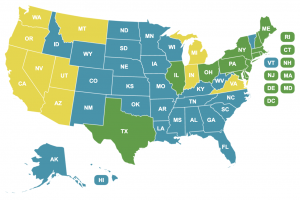
As of 2023, 17 states and the District of Columbia have chosen to allow all or some customers to shop and choose a competitive electricity supplier that best suits their unique needs. 32 states have energy choice in some fashion for natural gas. According to data from the Energy Information Administration, over 40 million U.S. households are able to shop for an energy provider. However, it is important to note that some restructured states do have restrictions on customer groups classified as low-income, hardship customers, or customers on energy assistance programs.
Visit our page on energy choice in your state to learn if energy choice is available in your area. Or, if you’re in a fully restructured energy market, find your state and start shopping today!
Leading U.S. Retail Energy Supplier Constellation Joins REAL
Constellation (Nasdaq: CEG), the nation’s largest producer of carbon-free energy and a leading competitive retail supplier, has joined the Retail Energy Advancement League (REAL), a national advocacy organization dedicated to modernizing retail energy markets and expanding consumer choice.
“We’re thrilled to have Constellation join REAL as our newest board member,” REAL President and CEO Chris Ercoli said. “Constellation is already providing innovative products and services to transform our energy future. But with some states still refusing to embrace full competition, the opportunities to drive even more innovation and support clean energy investments are limited. We look forward to working with Constellation to promote healthy retail energy markets. Retail choice gives consumers agency over their individual energy needs — and we believe empowered consumers will drive our country’s transition to a clean energy economy.”
Headquartered in Baltimore, Constellation serves approximately 2 million residential, public sector and business customers, including three-fourths of the Fortune 100 companies. The company is helping to accelerate the nation’s transition to clean energy with more than 32,400 megawatts of capacity and annual output that is 90 percent carbon-free.
Constellation Senior Vice President of Retail, Dan Verbanac, will represent the company on the REAL Board of Directors. Verbanac oversees Constellation’s sales of electricity to more than 100,000 commercial, industrial and public sector customers. He also co-leads the Retail Systems Transformation efforts related to the acquisition of Integrys Energy Services.
“The race is on to confront climate change,” Verbanac said. “As a leader in clean energy production, all of us at Constellation are ready to meet that challenge head-on — and we have already made significant progress in this effort. By joining REAL, we look forward to promoting the expansion of retail energy markets that will help us enhance consumer choice and empower residents to have a say in the clean energy solutions of tomorrow, giving them the renewable and sustainable options they want.”
In addition to Verbanac, REAL’s Board of Directors includes Mauricio Gutierrez, President and CEO, NRG; Scott Hudson, President, Vistra Retail; Tom Matzzie, President and CEO, CleanChoice Energy; Scott White, President and CEO, IGS Energy; Jim Wood, President and CEO, Calpine Energy Solutions; Glenn Wright, President and CEO, Shell New Energies US, LLC; and Michael Stein, President and CEO, Genie Retail Energy.