Categories
Energy News

Stakeholders Speak Out Against Proposed Legislation to Limit Choice in Maine

Yesterday, Maine Legislature’s Energy, Utilities, and Technology Committee held a hearing on LD 1431, with proposed amendments that have faced stark criticism from those who argue that they would all but end Maine’s competitive market and remove energy choice for its consumers.

While the bill’s overarching aim is to create a more regulated market for renewables and to incentivize competitive electric providers (CEPs) to participate in energy transformation projects, the legislation contains several problematic sections that would instead stifle competition in the state, remove choice for its consumers, and jeopardize the state’s ability to meet its RPS goals. 

Maine Legislature Discusses Energy Choice Bill
Deirdre Schneider speaks to the Energy, Utilities, and Technology Committee.

Deirdre Schneider spoke on behalf of Maine’s Public Utility Commission (PUC) on the organization’s concerns about the policy: “The PUC also has additional concerns about capping the prices that a CEP may charge. There have been instances where a CEP offers a firm rate that is higher than the SOS for a period of time but lower at other times, resulting in customers saving money in the long run because the price they locked in was ultimately less expensive than the SOS. This would not be possible if the amendment is moved forward. Moreover, setting a cap for CEPs is inconsistent with market competition…”

The legislation, as the PUC rightly identified, contains a damaging provision that would set a price cap on the rates that CEPs can offer, disallowing rates that go above the utility’s standard offer service (SOS) for any period of time. This proposed policy is inconsistent with the state’s competitive market and problematic for a number of reasons outlined by the variety of concerned stakeholders who spoke at the hearing.

Jeremy Payne, representing the Maine Renewable Energy Association, elaborated on how the legislation would be a setback for Maine’s RPS standard. “Removing such a wide swath of clean energy resources from our RPS will have the effect of tightening supply, and thus likely causing prices to increase… If the goal is to create a unique class of renewables to serve Maine consumers, then the CEP marketplace can already accomplish this goal under the current law. We suspect this may not be happening already because there is insufficient consumer demand for a subset of clean energy.” 

Marc Hanks of NRG further explained the issues behind setting a price cap for CEPs, explaining “CEP product pricing should not be compared to utility SOS. They are vastly different products. CEP pricing includes value-added products that can be beneficial to state RPS goals. For example, you can bundle community solar, energy-saving devices, EV chargers, and other renewable energy products. It’s incongruent to propose market caps, which would have a devastating impact on the ability to promote retail energy, which is not what the bill intends to do. CEPs are part of the solution, offering voluntary products. We stand ready to support the Maine market and the necessary consumer protection methods that can be implemented. We look forward to helping implement those with the committee.” View Hanks’ testimony here, starting at 4:58:00. 

Maine’s competitive energy market offers one of the last lines of defense for Maine customers facing unprecedented increases in their energy bills. According to a list of offers hosted on the Maine Office of Public Advocate’s website, there are 20 available offers from competitive retailers for residents to choose from. 

  • Versant (Bangor Hydro) ratepayers: 
    • 15 offers from competitive retailers are cheaper than the price of utility supply – two of which offer a 100% renewable product.
    • Customers who switch to the lowest fixed rate would save $56 / month.* 
  • Central Maine Power (CMP) ratepayers: 
    • 13 offers from competitive retailers are cheaper than the price of utility supply — three of which offer a 100% renewable product.
    • Customers who switch to the lowest fixed rate would save $70 / month.

*Calculations based on 1,875ft2 average energy usage of two-resident home = 1,173 kWh/mo

Maine customers can shop, switch energy suppliers, and save money while using 100% renewable energy. These plans range from 6-24 months in length and some offer value-added benefits such as EV charging incentives. 

Unfortunately, special interest groups are pushing a narrative that retail energy customers pay more than utility ratepayers, using a “study” that whistles past many inconvenient facts. The handpicked data supports a pro-utility monopoly narrative, selecting an intentionally limited time period when utility rates were in decline, rather than examining a retail energy supplier’s fixed, long-term contract. It’s worth noting that the report’s author, Susan Baldwin, has popped up in several states as an “expert” advocating that states force their retail energy customers back under the utilities’ thumb.

Despite the fact that customers can choose renewable options with CEPs, helping to accelerate the state’s clean energy goals while saving money, this study is cited in a bill intended to address the climate crisis. 

Chris Ercoli, President and CEO of the Retail Energy Advancement League, explains: “It’s disappointing that despite the clear opportunities CEPs offer to support Maine’s clean energy goals while protecting its residents from rate shock, lawmakers and special interest groups continue to attack the competitive market. Now is the time to support the market. We would look forward to collaborating with the committee to enhance consumer protections rather than restrict the ability of competitive suppliers to serve Maine’s customers and further its climate goals.” 

Following today’s testimony, the Energy, Utilities, and Technology Committee will review the information presented during the hearing and hold a working session to discuss the document further and make necessary changes. 

Categories
Energy News

Guide to Switching Energy Suppliers

If you live in one of the states below with a competitive energy market, did you know you can shop for your electricity or gas supplier? Well, you can — and state-run shopping websites make it more convenient and straightforward than ever. 

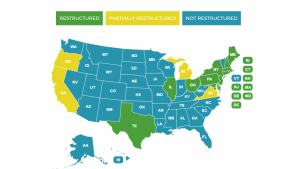
States with restructured electricity markets.

At REAL, our goal is to educate customers about their shopping options and help them make informed decisions when choosing a new supplier for their home or business. This guide informs potential customers about how to make the switch, includes contract terms to be aware of, and has helpful tips so you can take control of your energy bill and find the best value possible.

Before we get into the guide, let’s discuss the benefits of competitive markets and reasons you may want to shop:

Cost-savings: If you do not shop, you are usually left paying a default or standard rate with your local utility and are limited to one energy product. Your local utility will periodically increase its price per kilowatt hour (kWh) to account for its operating costs and the price it paid for supply in the market. To combat incurring unwanted rate increases, customers with energy choice can shop around and find less expensive short-term rate contracts or lock into a rate for a long-term, predictable contract from competitive suppliers. The option is yours to shop and compare prices so you can switch and save.

Carbon-free energy: Switching suppliers may not always be about the lowest price. Some customers value reducing their carbon footprint, so they may want to switch to a supplier who offers more clean energy options than their utility. When you shop, you can choose a supplier who offers 100% clean or carbon-free energy options, helping you drive your own environmental goals while providing a huge market incentive for clean energy resources nationwide. 

Product variety: Depending on market restrictions, some suppliers offer unique and innovative products and services that support your individual energy needs. You may select a supplier because it offers free nights and weekends for electric vehicle charging at your home. Or, maybe you’ll decide to choose the supplier that offers home warranty products as a discounted product bundle or smart home devices that help you control your energy usage. Again, it’s your choice.

Customer service: In competitive markets, retail energy providers must earn their customers, which makes customer service the heart of what drives their business. They listen to customers and track usage and demand and respond by altering services and offering products that customers have asked for. On the other hand, monopoly energy companies typically offer a universal product for all customers and aren’t built to tailor products and services unique to each customer. As a result, shopping customers can usually find a new energy provider which offers superior customer service and product variety compared to incumbent utilities. 

A few key things to know before shopping: 

  • Switching your energy supplier only affects the supply portion of your electricity or gas and has no effect on the delivery or reliability of your energy supply. Your utility company will still control the infrastructure that delivers the energy and make repairs and improvements to the lines that transmit and distribute your energy supply. 
  • Not all competitive plans are created equal — be vigilant when shopping and review all terms that may include an early termination fee, monthly fee, or introductory pricing, as well as what happens upon expiration of your plan.
  • Depending on your state, you can shop a variety of ways. Some states have a shopping website managed by the commission where customers can easily compare rates and terms. You can also sign up for a product by going directly through the supplier’s website or calling their sales numbers. Some suppliers will also send mailers, have sales representatives available in your neighborhood that can come to your home to walk you through the process or make sales calls alerting you to offers.


Find the Price to Compare

Before you get started, the most important information to know is your price to compare, which is the standard rate offered by your local utility. 

Sometimes it can be hard to find, as it’s located at different places on different bills and called different things. For instance, it can be called “standard service rate,” “generation service charge,” “generation charge,” or “basic service charge.”  

Look for the price per kWh you are paying on your electric bill. Once you figure out the rate that you’re paying to your utility, then you can shop online to compare what alternative rates are available to you by a competitive supplier.

But beware, some utilities are not required to list all fees, so comparing a utility’s base price to the prices offered by other retail energy companies is not always as straightforward as it seems. 

If you cannot find your price to compare, you should contact your utility company’s customer service number listed on your bill.

To help with this process, REAL created shopping guides for Massachusetts, Connecticut and Pennsylvania customers to educate them on how to shop and compare electric suppliers, and we provide additional resources for customers in other states who want to exercise their energy choice.


How to Shop for a New Energy Provider

Once you understand your price to compare, shopping is the easy part.

  • Step 1: Go to your state’s shopping website. (Find your state’s website in the list at the end of this post, or our energy choice in your state page.)
  • Step 2: Review the prices, types of products that are being offered, and the renewable makeup of the product. You can usually filter out plans based on price, generation mix, and length. 
  • Step 3: Take your time and compare options. Pay particular attention to contract terms and fees so you have no surprises later.
  • Step 4: Choose the plan that best suits your needs.
  • Step 5: Depending on your state’s market requirements, your new plan could take effect within three days or up to two billing cycles. Check your next bill to ensure your new supplier’s name and associated price per kWh is listed. 

It really is that simple. The utility and your chosen retail energy supplier will take care of the rest.

Be sure to make note of when your plan expires, so you can choose to renew, or choose a new plan before your current plan expires. Most states require suppliers to send a notice to customers when their plan is set to expire. In most cases, plans are automatically renewed. You can reach out to your supplier to learn more about your renewal options. 


Customer Service and Product Variety

Before you start shopping, there are things to keep in mind.

In a competitive market, suppliers are competing for your business, so customer service is imperative. This means they offer a variety of plans to try to get you — and keep you — as a customer. This includes allowing customers to set a budget, track their usage, improve efficiency, get alerts so they can be more informed, and so much more. Innovation is the hallmark of the retail energy market. Make sure you’re taking full advantage of the variety of products and services available to you.

When you shop, you can find energy solutions that are tailored to your specific needs and circumstances. Consumers can prioritize what matters most to them, whether that is contract length, price, carbon-free energy, cash back, flexibility, incentives for reducing usage or using energy at a certain time of day, or other factors that best fit the way they use electricity. The first factor to consider is the type of billing plan you want to enroll in. Here are the most common types of billing:

  • Predictable billing plan: If you’re on a fixed budget, a predictable billing plan offered by a retail supplier may be best for you. It allows you to pay a flat amount every month, all year long, protecting you from seasonal bill spikes.
  • Fixed-rate products: These plans offer a specific energy rate that will not change during the contract term, providing a consistent cost per kilowatt hour, so the bill fluctuates only according to actual electric usage. This gives you more control over what you use and what you pay.
  • Variable-rate products: If you’re looking for shorter-term contracts with no-term commitments, variable-rate products are the most flexible, changing month-to-month based on market conditions. Variable-rate products are typically the most affordable but are the least predictable.
  • Indexed-rate products: Indexed-rate products usually involve an agreement where consumers agree to pay a price that is designed to fluctuate based on the market. Similar to variable-rate products, you will benefit if prices stay low, but you also take on more risk if prices rise.

What matters most is, with shopping, you have the option to choose the plan that is right for you. You get to select the supplier and plan that matches your preferences and brings you the most overall value. 


Tips to Protect Yourself 

Some tips before you switch:

  • If you shop, be sure to carefully read your new contract. Make sure you know the length of the contract term and make note of when your plan expires.
  • Research if there are any other fees, including start-up fees or early termination fees should your situation change.
  • Know what incentives are available to you. Some retail energy providers may offer rebates for signing up, reducing overall energy use, or installing a solar energy system, EV charger, or other additional products.

While the process of shopping is easy, the responsibility is still on you to understand what you’re signing up for. It’s best to be cautious and avoid any deals that seem too good to be true. 

But don’t fear. There are consumer protections in place. For example, in Pennsylvania, there is a list of shoppers’ rights that you should review before getting started. Many states list the rights and protections consumers have on the official sites for shopping. 

If you do run into an issue, reach out to your supplier first. If you aren’t satisfied with the outcome, each competitive state has a consumer advocate office that you can contact for further assistance.

With that, you’re ready to shop! Here are some of the official sites for competitive markets in states that offer competitive rates. 

VIEW YOUR STATE’S SHOPPING PLATFORM OR RESOURCES BELOW:

Connecticut: https://energizect.com/rate-board/compare-energy-supplier-rates

Delaware: https://depsc.delaware.gov/customer-electric-choice/

Illinois: https://www.pluginillinois.org/

Maine: https://www.maine.gov/meopa/electricity/electricity-supply

Maryland: https://www.mdelectricchoice.com/

Massachusetts: https://www.energyswitchma.gov/#/

New Hampshire: https://www.energy.nh.gov/engyapps/ceps/shop.aspx

New Jersey: https://www.energy.nh.gov/engyapps/ceps/shop.aspx

New Jersey: https://www.nj.gov/bpu/commercial/shopping.html

New York: https://documents.dps.ny.gov/PTC/home

Ohio: https://www.energychoice.ohio.gov/

Pennsylvania: https://www.papowerswitch.com/

Rhode Island: https://www.ri.gov/app/dpuc/empowerri

Texas: https://www.powertochoose.org/

Washington, D.C.: https://dcpowerconnect.com/approved-suppliers/

Categories
Energy News

Benefits of Competitive Energy Markets

Benefits of Competitive Energy Markets

The benefits of energy choice are becoming increasingly clear. In today’s competitive energy markets, families and businesses can choose energy solutions that are tailored to their needs, rather than relying on one-size-fits-all plans from monopoly utilities.

As of July 2024, 22 states and the District of Columbia have broken the utility monopoly model, allowing some or all customers to shop for competitive suppliers and select an energy provider that best suits their unique needs. With consumers demanding more affordable, clean, reliable, and individually tailored energy options, the number of customers who value energy choice and shop for electricity or natural gas continues to grow.

According to the U.S. Energy Information Administration, in 2021, 26% of eligible U.S. customers participated in their state’s retail choice program, or 13.2 million U.S. residential electric customers. This demand for energy choice is driven by a desire for affordable energy solutions that are tailored to individual preferences and needs.

In many states, the decision to do away with the monopoly utility model in the late 90s was driven by customer demand for cheaper energy and a lack of confidence in how the utility industry was managing assets and costs. 

Almost three decades later, priorities have since expanded, and customers now want energy solutions that are also clean and reliable, while policymakers are driving policies that require the procurement of clean energy. Customer engagement in demand response and time-of-use products is also supporting grid resilience as more intermittent resources come online. 

Today’s customer, policymaker, and market are not that of the 90s, and for restructured states that encourage competition and innovation, the markets and market benefits have evolved with our expanding priorities.

In this article, we will explore the many advantages of competitive energy markets, from driving down prices to giving consumers more options, convenience, and control.


Product Variety & Innovation

Exceptional customer service is at the foundation of competitive markets because suppliers must earn the loyalty of every customer every day.

When multiple energy providers compete to provide electricity and natural gas, suppliers focus on offering a broad variety of plans, including features that allow consumers to set a budget, track usage, improve efficiency, and easily get alerts so they can be more informed, all as a way to obtain and maintain that customer relationship.

In other words, unlike monopoly utilities, competitive suppliers are attentive to customers’ demands and provide energy solutions tailored specifically to their individual needs and circumstances.

That allows consumers to compare plans and maximize the aspects that matter most to them, whether that is contract length, price, carbon-free energy, cash back, flexibility, or other factors that best fit the way they use electricity. A few of the various plan options advantageous to standard service include: 

  • Fixed-bill plans, also known as predictable billing plans, offered by electric retail suppliers allow the consumer to pay a flat amount every month, all year long, protecting consumers from seasonal bill spikes. Think of these as an “all you can eat” energy plan.
  • Fixed-rate products offer a specific energy rate that will not change during the contract term (e.g., a term can be 12 months), providing a consistent cost per kilowatt-hour, so the bill fluctuates only according to actual electric usage, giving consumers more control over what they use and what they pay.

What matters most is that consumers choose the plan that is right for them.

Electric competition also spurs innovative, value-added services that deliver on the promises of choice, convenience, and control. So, when the customer has the power to choose suppliers, suppliers seek innovative ways to win and retain them. A few examples include: 

  • 100% carbon-free energy plans
  • Smart home technologies
  • EV charging 
  • Backup power options
  • Behind-the-meter solar
  • Community solar


Efficiency and Resiliency

In monopoly states, customers have limited or no energy options beyond a single default rate. This outdated model made sense a century ago when the electricity industry was new and the government wanted to ensure its viability. But with innovative technologies and services available today, and rapidly changing consumer demands, the monopoly utility network is no longer fit for meeting current and future energy needs. We are asking more of the grid than ever before, and while utilities do have a critical role to play in energy markets by delivering power reliably at the lowest cost possible, they are not capable of handling the increasingly complex grid of 2023 alone. 

On average, U.S. electricity customers experienced over eight hours of power outages in 2020, the most since the EIA began collecting data in 2013. There are various factors causing this increase, led by major weather events, but also including aging infrastructure, vegetation patterns, and utility practices. Resiliency has taken center stage as a result of this pattern, and these changes call for far more investment in transmission and distribution (T&D) than we’ve ever needed before. In a truly competitive market, utilities would focus more on ensuring reliability in T&D, rather than the retail sale of electricity.

In addition to improving the resiliency of the grid, states are moving forward with their goals to replace traditional fossil generation with clean energy alternatives, all while electrifying transportation and other parts of the economy. As a result, today’s grid composition includes far more distributed and intermittent energy resources than before, and managing this load requires a much more flexible T&D system. We are left managing a delicate balance of supply and demand that can shut down during any critical events where supply and demand do not match. Investment in demand-side efficiency is essential in preventing consumers from shouldering the cost of increased transmission and distribution. 

In competitive markets, utilities typically handle the delivery portion of the grid, increasing and decreasing supply in response to changes in demand. But the challenges facing today’s grid call for more than adjusting supply. With the uncertainty of supply given the introduction of so many intermittent resources, it’s becoming increasingly important to flexibly control demand through customer engagement and demand response. This is where energy efficiency comes into play — and retail suppliers play a key role. 

Unlike utilities, retail suppliers can incentivize flexible demand and get time-of-use products and controllable devices into homes and businesses faster than utilities otherwise can. More importantly, retail suppliers can do this while innovating. Competition between energy providers leads to more innovation and investment in energy-efficient products and services such as smart thermostats, efficient appliances, and custom billing arrangements that can help homes change their behavior and reduce their energy consumption, especially during peak hours of high demand. 

The ability for states to achieve clean energy goals while maintaining grid resiliency depends on the regulatory environment’s structure. For example, suppliers’ inability to access their customer’s usage data or engage with their customer directly limits their capacity to offer customer-specific products such as demand response, time-of-use, or smart home integrations.

Competitive markets shift the customer relationship to where it should be, between the customer and their service supplier, allowing utilities to prioritize investments in upgrades that enhance infrastructure and ensure the power grid’s resiliency.


Economic Development

Competitive energy markets spur economic development in several ways. They create a competitive market where consumers have more options to choose the energy provider that best fits their needs. This competition encourages providers to offer better pricing, services, and innovation, leading to overall economic growth.

Competitive energy markets allow companies to respond to customer demand for clean energy solutions without increasing costs for ratepayers. As customers demand more affordable, reliable, and sustainable energy options, businesses are incentivized to invest in clean energy generation assets such as wind, solar, and hydropower. This not only creates jobs in the construction and operation of these facilities but also generates tax revenue for local communities. By fostering innovation and competition, energy markets enable companies to achieve their sustainability goals and differentiate themselves in a crowded marketplace, all while ensuring that the costs of these investments are borne by the businesses themselves rather than passed on to customers through higher rates.

Energy choice also provides more opportunities for investment and entrepreneurship. When consumers have options, they are more likely to seek out new and innovative providers, leading to the development of new companies and technologies. This not only creates jobs but also encourages investment in research and development, leading to new advances in energy technology and further economic growth.

In addition to the benefits for consumers, energy choice also draws in businesses. When companies have the option to choose their energy provider, they can select one that offers more competitive pricing, more reliable service, or renewable energy options that align with their corporate sustainability goals. This can help to attract and retain businesses in a region, contributing to economic growth and job creation. Furthermore, energy choice can lead to the development of local energy infrastructure and services, creating new business opportunities and contributing to a diversified economy. 


Energy Cost Savings

When consumers have the buying power, they often seek the best deals. Competitive energy markets give them the option to shop and save.

In Pennsylvania, for example, consumers have had the option of choosing their electric service provider for a quarter of a century, as part of the Electricity Generation Customer Choice and Competition Act of 1996. Before introducing competition, Pennsylvania had some of the highest electricity prices in the country. Since the introduction of competition, prices have lowered and stabilized. Average Pennsylvania electric rates were 15% above the national average before the state embraced competition. Now they are about 7% below.

Not long after Pennsylvania enacted its law, Massachusetts opened its market in 1997, adopting the Electric Restructuring Act, which ended the captive utility monopoly that had consumers paying some of the highest prices regionally and facing unfair rate hikes. Energy choice has encouraged a healthy competitive market that benefits consumers. Massachusetts customers have saved more than $1.5 billion since the Electric Restructuring Act took effect.

A joint study, “Electricity Customer Choice in Ohio,” prepared by Cleveland State University and Ohio State University for the Northeast Ohio Public Energy Council (NOPEC) and last updated in 2019, said energy competition had saved Ohio consumers $23.9 billion since 2011. (Ohio restructured its markets in 1999.) The study noted competition drove down the standard service offer, saving Ohioans $19.5 billion. It estimates that customers who shopped for energy, whether on their own or through a government aggregator like NOPEC, enjoyed an additional $4.4 billion of savings.

More recently, in Connecticut, the Office of Consumer Counsel (OCC) noted in a January 2023 report that customers who shop the competitive electric marketplace and chose a supplier other than their default utility saved in aggregate $23,706,010 between February of 2022 and January of 2023. The OCC is an independent agency that advocates for utility ratepayers on issues decided by the Public Utilities Regulatory Authority.

Energy prices can be highly volatile, based on a diverse set of complicated factors. The beauty of competition is that if a customer does not like what they currently pay, they are empowered to shop for a different supplier at a lower cost. They can even lock in that price for an extended period of time to safeguard against volatility, ensuring the savings continue into the future.


Consumer Protection

In states with monopoly utilities, customers are at the mercy of their utility when it comes to energy prices and services. If prices go up, customers have no choice but to pay, and if they want clean energy but their utility isn’t offering it, tough luck. This lack of choice and competition leaves customers vulnerable to exploitation and high costs.

On the other hand, competitive energy markets provide consumers with more protection and options. In a competitive market, if a company raises prices too high or fails to provide the services that customers want, those customers can simply take their business elsewhere. This competition encourages providers to offer better pricing, services, and innovation, leading to overall economic growth.

In competitive energy markets, consumers are not left to bear the costs of bad generation investments made by utilities. In monopoly states, when utilities make bad investments like the Vogtle or Summer nuclear plants, customers are held captive and forced to pay for it without any other options. However, in competitive markets, suppliers assume the financial risk and  are held accountable for their investment decisions because they must compete with other providers. This competition ensures responsible investment decisions and that the costs of any mistakes are not unfairly passed on to consumers.


Power of Choice

Price is not the only value proposition in competitive markets. While it may be among the reasons consumers enter the retail choice market, it is not the sole reason they stay. Factors such as brand reputation, level of service, and degree of product innovation also matter.

Regardless of the reasons, consumers have made it resoundingly clear that they want the power to choose the energy they use, who delivers it, and the products they pay for.

In Connecticut:  

A survey of electric ratepayers from Emerson College Polling Center found that 89% of respondents believed they should be able to choose their electric supplier, even if they didn’t shop for a supplier.

In Massachusetts:

A poll by SurveyUSA on behalf of CleanChoice Energy found that 79% of respondents said they want to be able to choose who supplies their electricity. 

In West Virginia: 

A similar poll in West Virginia, 78% of consumers said they should be able to pick the natural gas supplier who serves them. 

In Pennsylvania: 

A 2020 survey of 729 likely voters in Pennsylvania by Susquehanna Polling & Research found that 89% of consumers said they support the ability to shop for electricity plans in the same way they do for cell phone, internet, or TV plans.

In Virginia: 

A 2017 study by Public Opinion Strategies and a 2021 SurveyUSA poll found that 88% and 77% of Virginians, respectively, want to choose their electricity supplier. This sentiment is a culmination of decades of dealing with a broken monopoly system that isn’t held accountable. Virginians currently lack access to providers that can offer competitive pricing or products and services that can reduce their energy costs.

Nationally:

The latest annual poll by the Conservative Energy Network shows that voters overwhelmingly support more competition in the electricity sector, with 87% of respondents supporting increased competition in the electricity markets and 59% strongly in favor of more competition. Two-thirds of voters who responded to the poll agreed that America can create a new electricity system that benefits the environment, accelerates the availability of new technology, and creates more opportunities by opening markets to competition and giving consumers more choices instead of just their monopoly utility.

Consumers have spoken, and they want the power to choose because the benefits are real.