
“For the first time we seem to have a solution.”
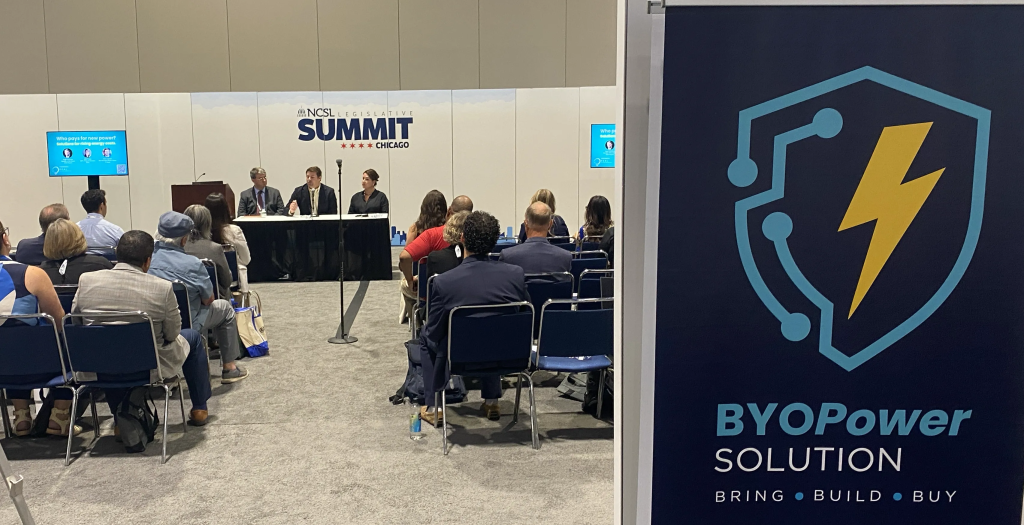
During a panel discussion at the 2026 National Conference of State Legislatures (NCSL) Summit, West Virginia Speaker of the House of Delegates Roger Hanshaw promoted energy legislation that will support and protect residents and businesses in the Mountain State.
Like many states, West Virginia policymakers are in search of a solution that can shield ratepayers –– their constituents –– from the extreme costs of utility-built or retrofitted power plants that are being proposed to meet growing demand. First Energy’s proposal for a natural gas plant and multiple solar facilities in West Virginia is projected to cost at least $2.4 billion. According to a First Energy spokesperson, this would be a more than two percent rate increase each year for residents through project completion (targeting 2031). Ratepayers are frustrated over the proposed increases, and policymakers want to protect their pockets.
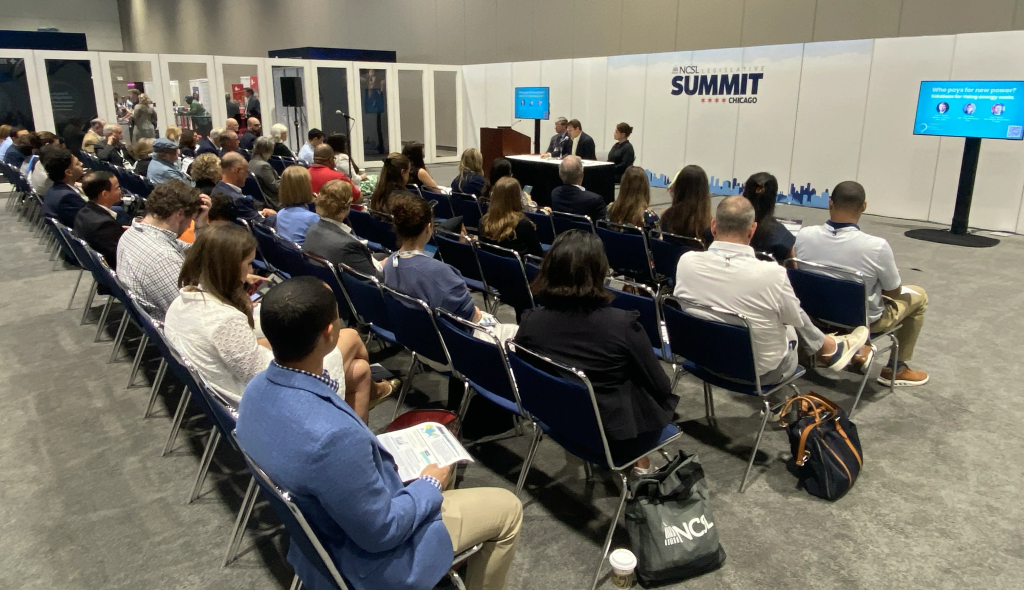
“We seem to have a strategy that allows large load users to take advantage of newly built generation provided by a third party that would overall lessen the demand on the grid making electric service more reliable for residential ratepayers while simultaneously protecting the residential rate base from the swings associated with the return on invested capital,” Hanshaw shared in a room packed with policymakers and legislative staff from around the country.
The legislation is the Energy Freedom & Fairness Act, a buy your own power (BYOP) model that allows some large energy users to procure their own electricity from competitive energy suppliers, rather than relying on the utility to build and bill all ratepayers for all of the new capacity needed to serve customer demand.
“We’re excited about this legislation. We’re excited about what it could potentially be for our economy just as much from a reliability perspective as from an economic development perspective,” Hanshaw continued.
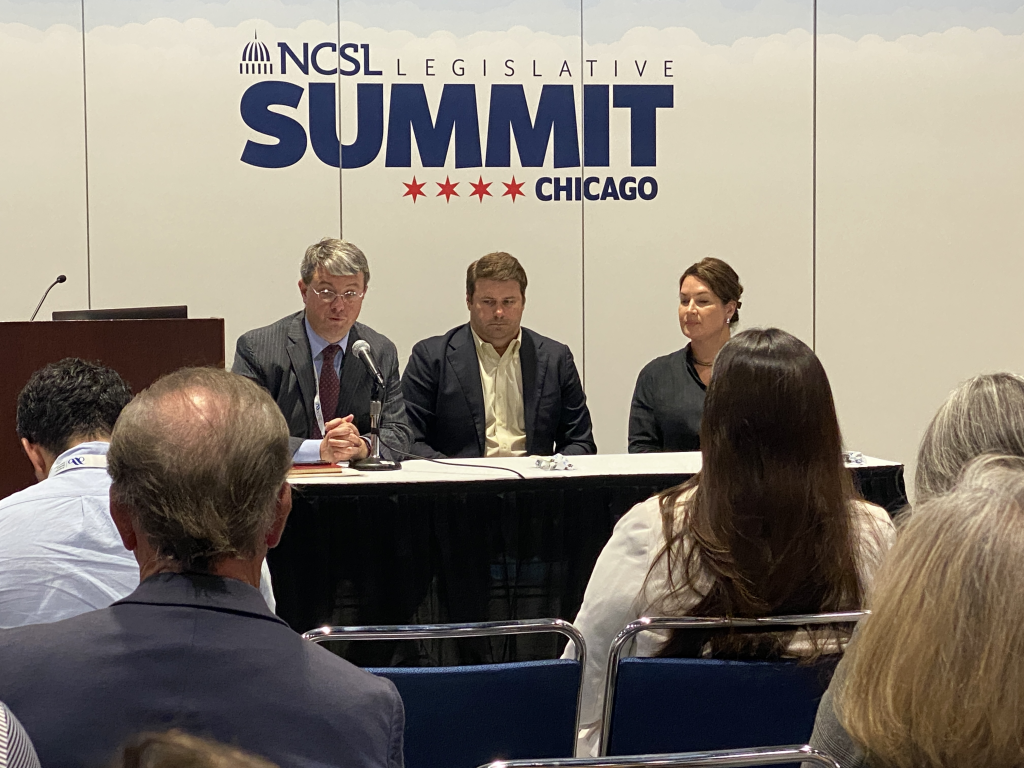
Kent Chandler, a former chairman of the Kentucky Public Service Commission, joined Hanshaw on the panel and echoed the benefits of a state policy that allows large energy users to buy their own power. Chandler pointed to the growing demand for electricity, the wave of existing power plant retirements and the costs that burden ratepayers in the vertically integrated states where utilities recover those costs –– plus return on equity.
If customers buy power outside of the utility it is financed by private companies, not ratepayers. Every megawatt hour procured outside of the utility is that much less the utilities will need to build and bill, helping to blunt the significant costs otherwise facing West Virginia ratepayers.
Data from Lazard’s 2025 Levelized Cost of Energy projects that one gigawatt (GW) natural gas plant (a less expensive baseload power generation source) costs ~$1.5 billion, conservatively –– paid for by consumers.
West Virginia produces about 16 GWs of electricity and aims to expand its total generation capacity to 50 GW by 2050 under the state’s “50 by 50” energy strategy.
“That’s almost the magic bullet for us,” Hanshaw said. “It’s why we are interested in this legislation. It’s why the state of West Virginia is expected to begin consideration of this when we convene in January of 2027. We want to generate power. We want to export power. We’ve been exporting power for 200 years and we want to keep doing it. But we also know as representative legislators we have obligations to constituents, we have obligations to residential ratepayers that we have to honor and protect.”
Electricity is becoming a top cost driver for commercial and industrial businesses. Not having the ability to shop for long-term contracts and cheaper electricity prices makes it harder for major employers in West Virginia to outperform competitors. Those costs also prohibit investments in their operations.
West Virginia is surrounded by states who already allow large energy users to procure their own electricity in some form. This legislation is targeted just for large energy users. It will not “deregulate” or fully open the state’s energy market to competition, but it will allow for investments from private capital.
With access to serve large energy users through a wholesale market, independent power producers (IPP) are attracted to states where there is a BYOP option for consumers. These power producers invest private capital –– not ratepayer dollars –– to build new power generation in those states. The ability for IPPs to construct power sources is more often faster and more efficient than when an investor-owned utility (IOU) does it, because the financial risk is on the IPP with no ratepayer involvement.
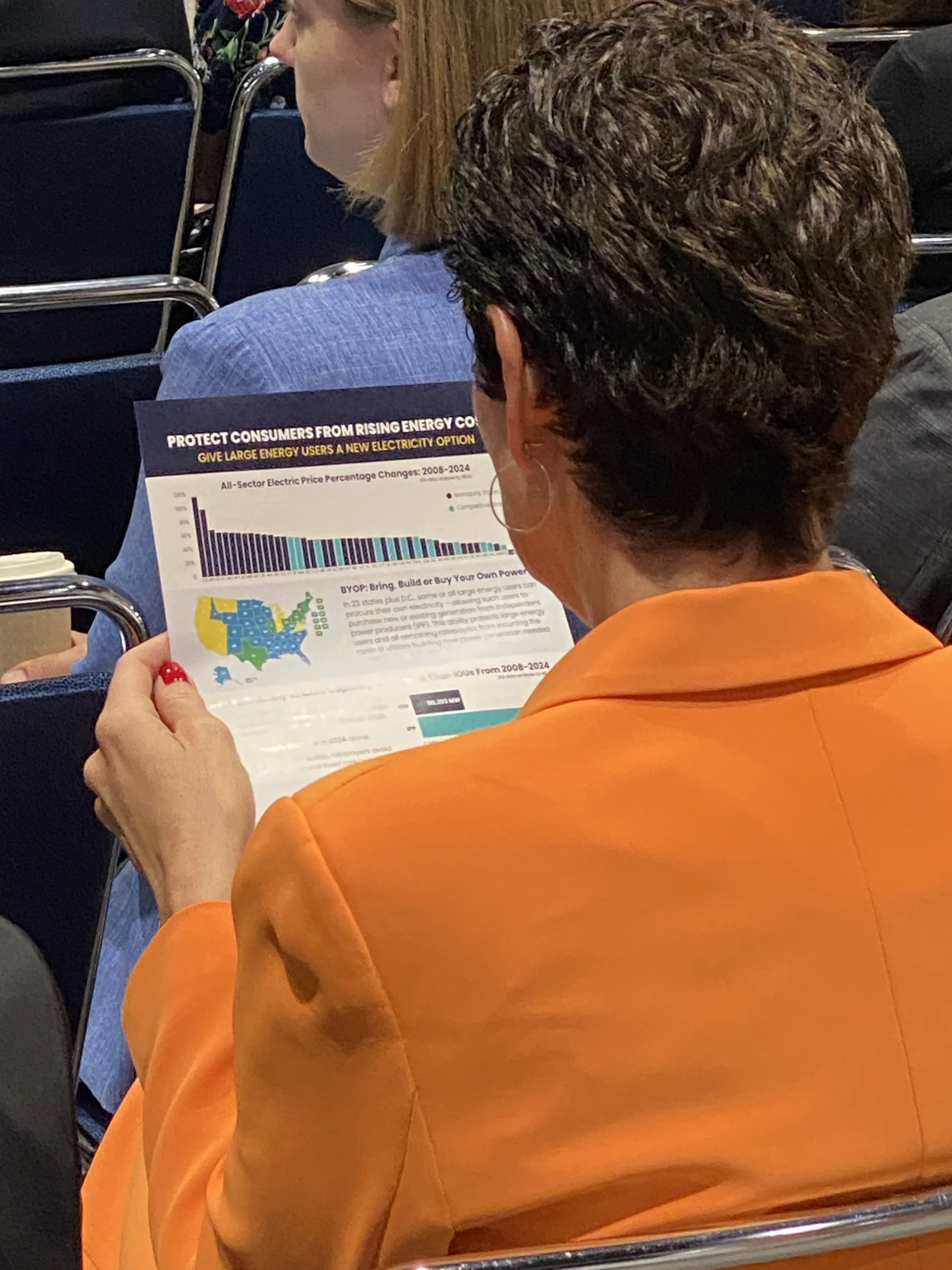
Analysis of data from the U.S. Energy Information Administration shows that IPPs have built nearly 3x more capacity generation than IOUs between the years of 2008 and 2024. In 2024 alone, IPPs built nearly 5x more capacity generation.
For Hanshaw, he sees the opportunity to continue to make West Virginia more powerful while protecting his constituents.
“That’s why we’re interested in this approach to generation,” Hanshaw added. “It’s why we’re interested in this solution to a problem. It’s why this template bill caught our attention.”
