
Bill relieves energy demand pressure on utilities, protects ratepayers from new generation costs
CHARLESTON, WV (Feb. 3, 2026) –– New legislation was introduced to strengthen West Virginia’s energy market by giving major employers new options to manage electricity costs, while protecting residential and small business ratepayers. The bill, Senate Bill 733 introduced by Sen. Patricia Rucker, is common-sense legislation that allows commercial and industrial companies to purchase electricity supply directly from competitive electric suppliers rather than being limited to a single utility option, helping them better manage rising energy costs.
“West Virginia’s economic future depends on having reliable, affordable electricity,” said Sen. Patricia Rucker, sponsor of Senate Bill 733.“When rising energy costs make it harder for major employers to do business, it puts jobs, wages, and future investment at risk for West Virginians. This legislation gives employers more flexibility to manage their energy costs, while protecting families and small businesses from the risks of energy intensive businesses. This is a practical, market-driven approach that encourages investment, supports job creation, and helps ensure our state has the power it needs for the future.”
The Retail Energy Advancement League (REAL), a national organization advocating for energy market expansion and consumer choices, applauds Sen. Rucker for championing legislation that will provide commercial and industrial businesses with a choice in their power supply.
“The concept is simple: allow large energy users to have direct access to an energy marketplace to meet their electricity needs the same way utility companies do,” said Chris Ercoli, president and CEO of the Retail Energy Advancement League.“Allowing large energy users to access competitive electric supply is a practical solution that can reduce their cost pressures, encourage new power generation from independent power producers, and ease the strain on utility systems — benefiting all ratepayers in the long run. We applaud Sen. Rucker for her comprehensive approach to help support West Virginia’s energy needs.”
Electricity is a top three operational cost for commercial and industrial businesses. Neighboring states, such as Ohio, Pennsylvania, Maryland and Virginia, already allow large energy users to procure their own electricity and secure significant savings –– West Virginia risks falling further behind.
According to a study by Cleveland State University, commercial and industrial energy customers in Ohio collectively save an average of $1.17 billion annually by having access to a competitive electricity marketplace.
“West Virginia manufacturers depend on affordable, reliable electricity to compete, grow, and keep people working,” said Bill Bissett, president of the West Virginia Manufacturers Association. “Energy costs are one of the biggest factors in whether manufacturers can grow and remain competitive. This legislation gives employers greater control over costs and reliability. It’s a smart, pro-jobs solution that builds on last year’s microgrid law and expands energy control to more in-state manufacturers. With this bill, lawmakers can strengthen our economy, protect jobs, and ensure West Virginia businesses remain competitive.”
Under current West Virginia law, residential, commercial, and industrial customers are required to receive electricity supply from their designated utility. This structure places the full burden of growing energy demand on utilities, requiring them to build or purchase additional power — costs that are ultimately passed on to all ratepayers. Senate Bill 733 allows large energy users –– manufacturers, steel plants, tech companies –– to shop for their electricity from a supplier or power generator other than their utility company.
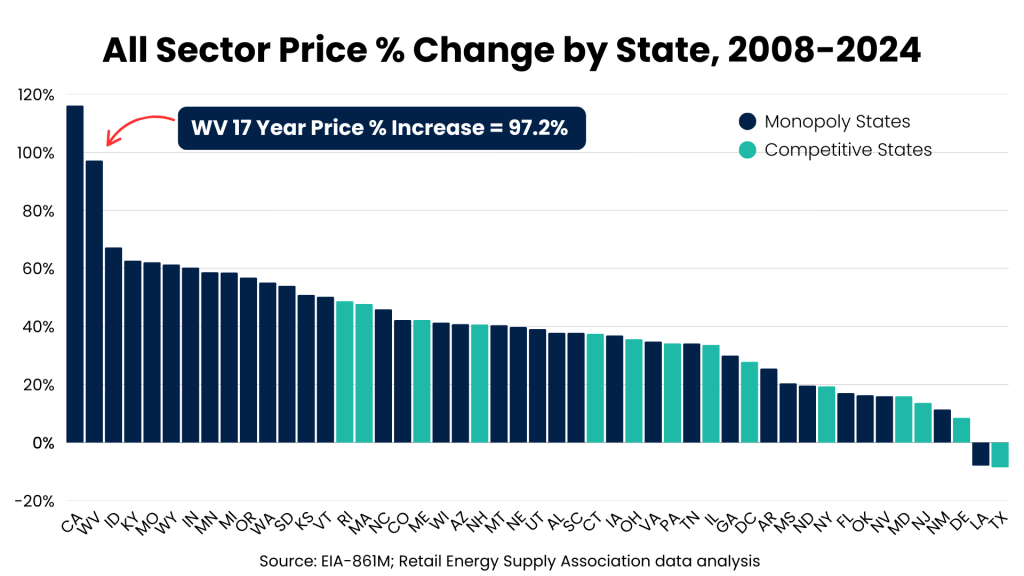
West Virginia continues to rank second worst –– out of all states ––in electricity price percentage change since 2008.
By allowing large energy users to procure their own electricity, this legislation positions West Virginia to attract new investment, strengthen grid reliability, and address rising energy costs without shifting financial burden onto households and small businesses. Senate Bill 733 represents a commonsense step toward a more resilient, competitive energy future for the state.
